Miniaturization and extreme precision
Laser technology is used wherever miniaturisation is key. With the right combination of laser and optics,
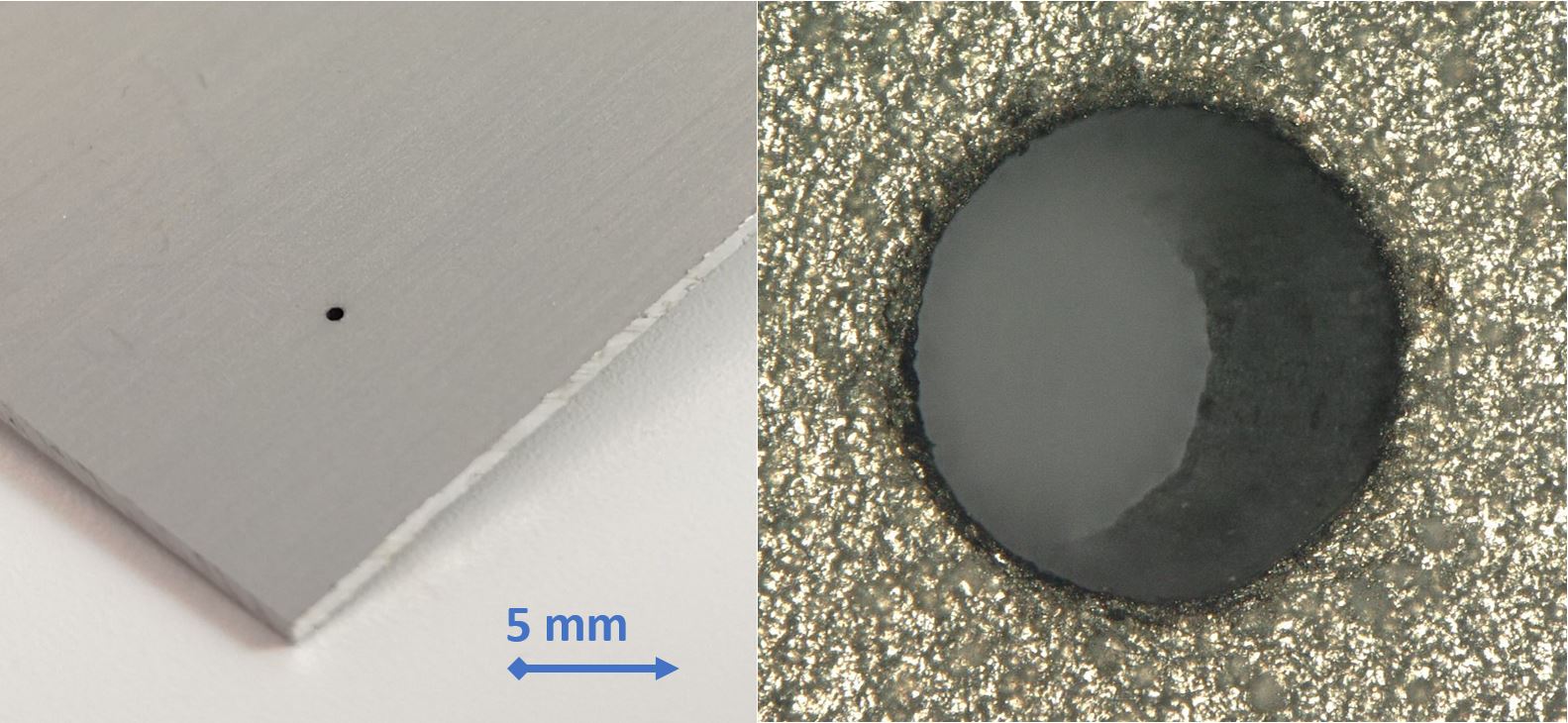
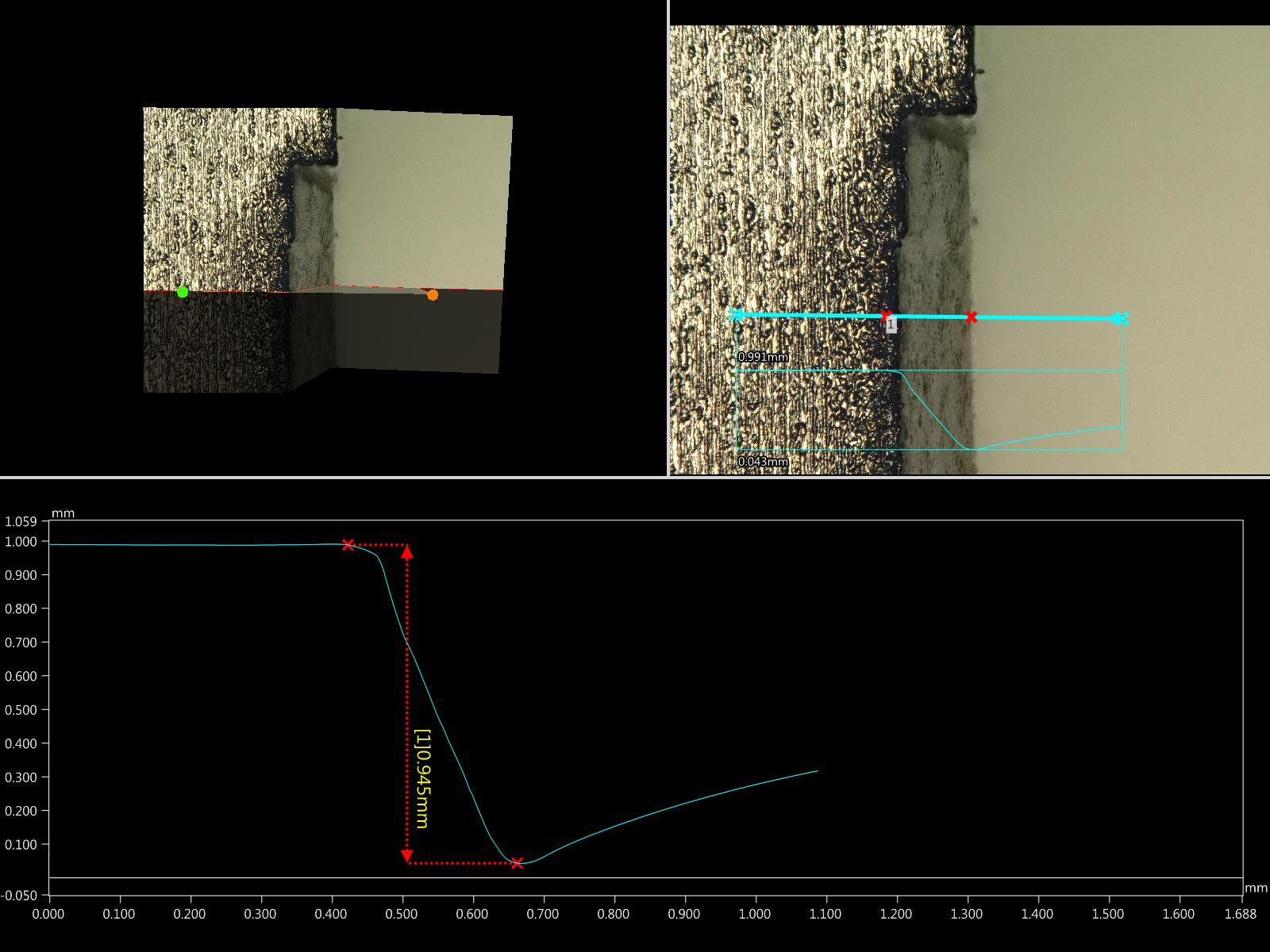
In our application laboratory we have a precision optical microscope with an additional lens, which allows the resulting patterns and structures to be verified and measured in detail. This guarantees the high quality of each processed shape.

Advantages of laser micromachining
Gentleness and precision – minimal thermal influence, precision to micrometers.
Non-contact method – no mechanical wear of the tool.
Speed – drilling holes in fractions of seconds.
Clean result – minimal burrs, clean bore profile and engraving.
Flexibility – machining even hard-to-reach areas and 3D surfaces.
Efficiency – no consumables, low operating costs.
Typical applications
Surface activation – roughening to increase adhesion (e.g. before gluing or applying sealant).
Micro drilling – precise holes in metals, plastics, ceramics or wood.
Engraving and edge shrinking – precision profile finishing with measurable accuracy to micrometers.
Texturing – creation of functional surfaces for absorption or repulsion of liquids, non-slip surfaces.
Miniaturization – production of detailed patterns with a laser footprint of up to 5 µm.

Lasers used and power
We use pulsed fibre lasers with power outputs of 20 W, 50 W, 70 W and 100 W. The highest efficiency is achieved with a 100 W laser with frequency modulation up to 4.16 MHz, which allows us to meet even the most demanding line rates in the automotive industry.
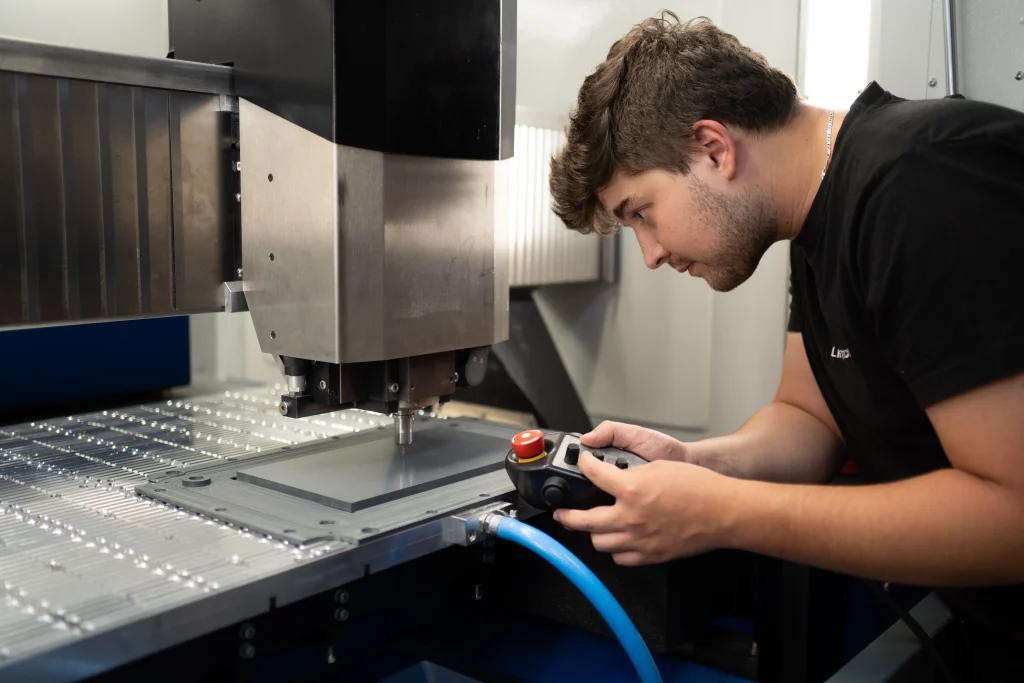
You can see the laser micromachining process in the video from our application laboratory.