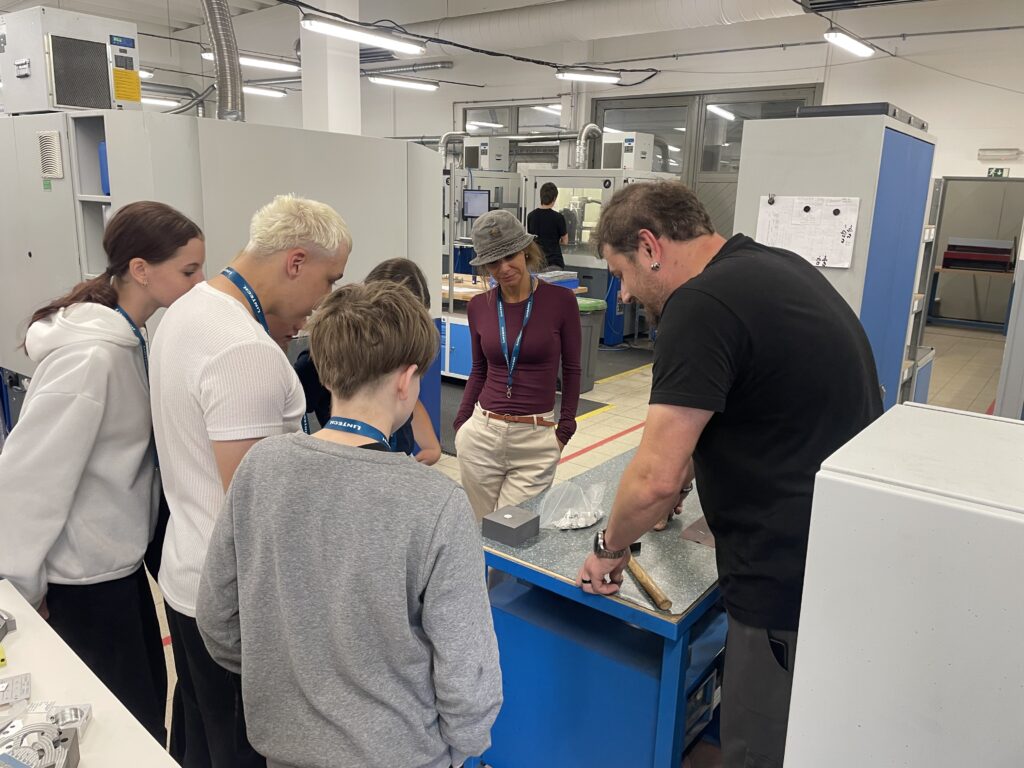
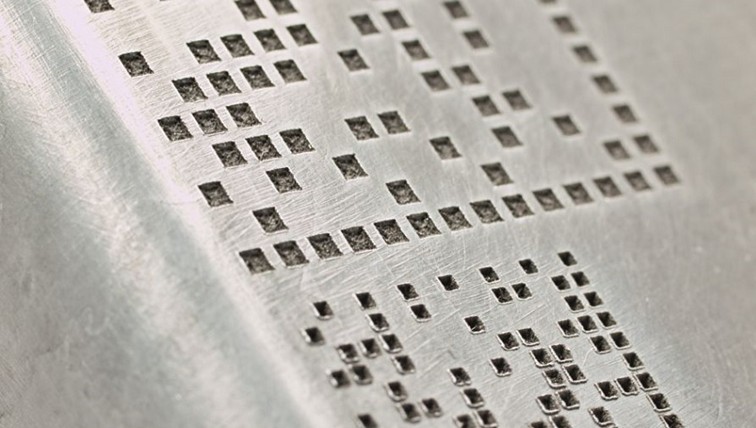
A video demonstration of a real-life application in the form of laser drilling of aluminium tubes with wall thicknesses of 0.5 and 1.5 mm. See how the LINTECH development team has fine-tuned the laser application.
Laser drilling is one of the more difficult laser applicationsif you want to get an output that is both high quality and produced in a short time. Pulsed laser sources can be successfully used for laser drilling, especially in the near-infrared wavelength range, which can interact well with the most commonly used industrial materials (especially metals).
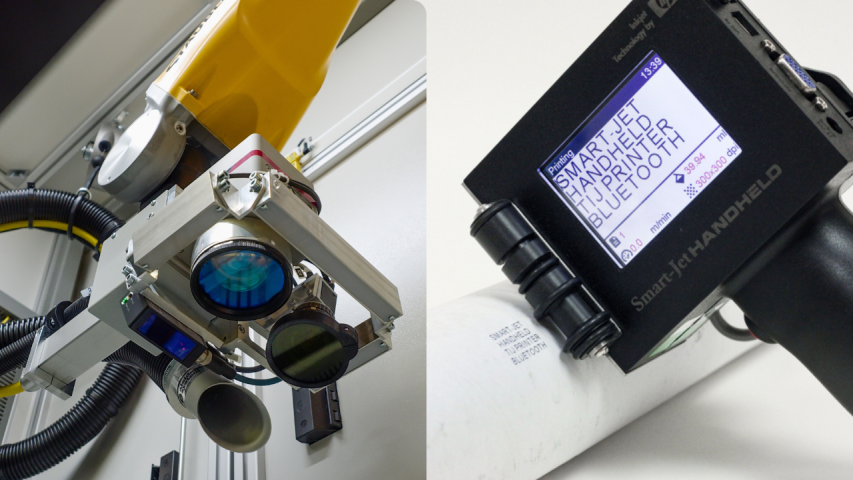
This particular laser drilling application was developed by a team of LINTECH experts in own application laboratory on several different types of pulsed nanosecond laserassemblies for a broader understanding of the phenomena involved and their impact on the drilling process.
The results of the laser drilling tests are presented in a video demonstration, specifically on drilling aluminium tubes with wall thicknesses of 0.5 and 1.5 mm. The process time was optimized to a maximum of 0.5 and 4s, while maintaining the optimal geometry and quality of the drilled hole.
There are several advantages of laser drilling:
it is a non-contact process,
the surrounding material is not affected,
high level of hole accuracy,
the possibility of drilling in hard-to-reach places,
long service life of the technology,
enables very accurate and consistent results,
offers the user complete control – a very reliable process.
There are a number of drilling methods, the applicability of which depends on the thickness of the material to be drilled and the size of the hole required, right down to the demands on process time and the resulting appearance.
For the thinnest materials in the form of various foils, it is possible to use percussion drilling, where the material is pierced by one or more repeating laser pulses. The result is a very fast process, but the size of the holes is directly dependent on the size of the laser track. For larger holes and greater material thicknesses, circular or helical drilling can be used successfully. Here it is necessary to use the deflection of the laser head to create circular cutting geometries. The largest holes are most often created by engraving (sublimation of the material in the hole area) or by direct cutting out. In some cases, it is advisable to combine different methods with different numbers of repetitions to achieve the optimum result.
The drilling process is influenced by a large number of laser parameters, among the most important are:
laser pulse energy,
length of laser pulses,
the size of the laser track,
for more demanding applications, the drilling geometry used together with the pulse spacing (i.e. the combination of pulse frequency and beam speed).
Longer pulses with higher energy reach greater depths in a relatively short time, but their activity is accompanied by increased scaling around the hole. Shorter, lower energy pulses are more sensitive to the material, resulting in lower efficiency but better hole appearance.
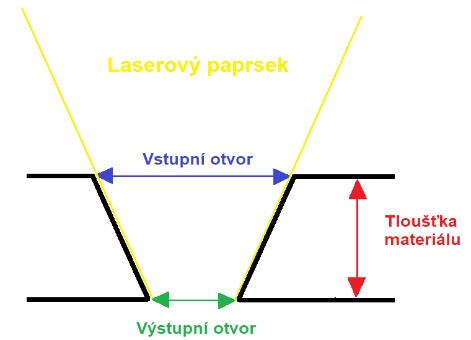
When laser drilling materials of greater thickness, it is necessary to pay attention to several phenomena that negatively affect the process. Due to the conical profile of the laser beam, the drilled holes are also conical, i.e. the entrance hole is always larger in diameter than the exit hole. This can only be reduced by using special 3D/4D laser heads. Because the laser beam is normally deflected at an angle by the head, the holes at the edges of the laser field have a noticeable slant. This can also be counteracted by using a so-called telecentric lens, which maintains the perpendicularity of the laser beam in all parts of the laser field. The last phenomenon is the loss of laser drilling efficiency due to misfocusing of the beam. The issue of focusing is quite critical, especially for larger material thicknesses and small laser optics that have a shallow depth of field. For particularly thick material walls, it is necessary to change the laser focus several times during the drilling process.
Laser drilling is used in several industries, especially in the aerospace, automotive, electrical andmedical industries.
Video
Have we worked together before? We can help you expand the capabilities of your facility to suit your needs.
We use cookies and other services for content personalization, advertising and analytics. We share information about your use of the Site with partners who may combine it with other data as a result of your use of their services. By clicking "I Agree", you give us permission to process personal information and cookies for personalized content, advertising and analytics purposes.
Functional and technical (necessary)
Always active
Necessary cookies and services are essential for the proper functioning and display of the website, enabling basic navigation or filling out forms or logging into secure sections.
Předvolby
Technické uložení nebo přístup je nezbytný pro legitimní účel ukládání preferencí, které nejsou požadovány odběratelem nebo uživatelem.
Analytical
Analytics cookies and related services are useful in tracking visitor numbers and identifying traffic sources, allowing us to continually improve the performance of our website.Technické uložení nebo přístup, který se používá výhradně pro anonymní statistické účely. Bez předvolání, dobrovolného plnění ze strany vašeho Poskytovatele internetových služeb nebo dalších záznamů od třetí strany nelze informace, uložené nebo získané pouze pro tento účel, obvykle použít k vaší identifikaci.
Marketing
Some of our advertising partners may set cookies on our website. By granting consent, we may use the cookie or other personal information (phone, email or address) to create profiles based on your interests and then serve relevant advertising on other websites through advertising systems such as Meta Ads, Google Ads and Sklik.