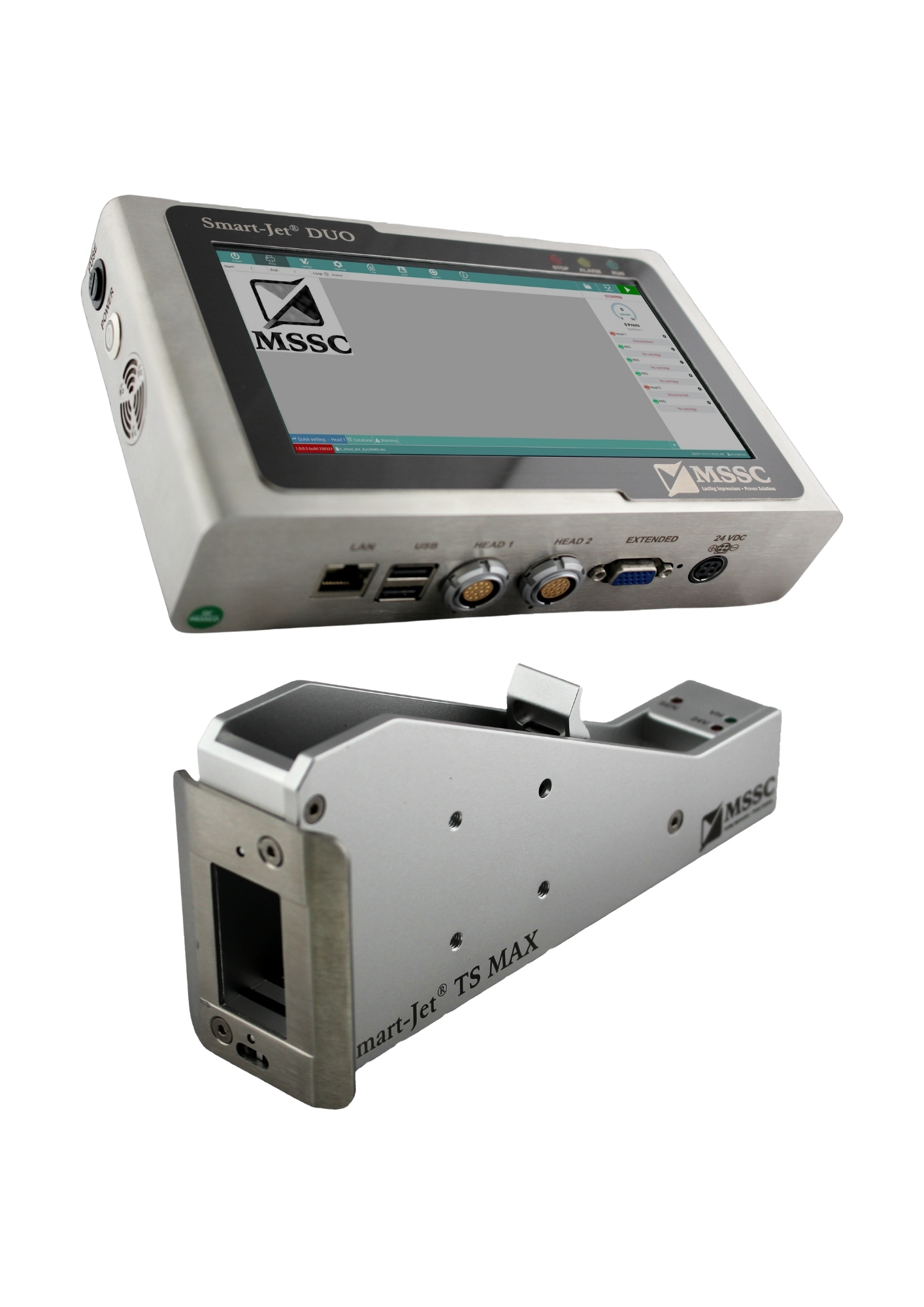
What is inkjet marking and what are its advantages and disadvantages

30. 5. 2025

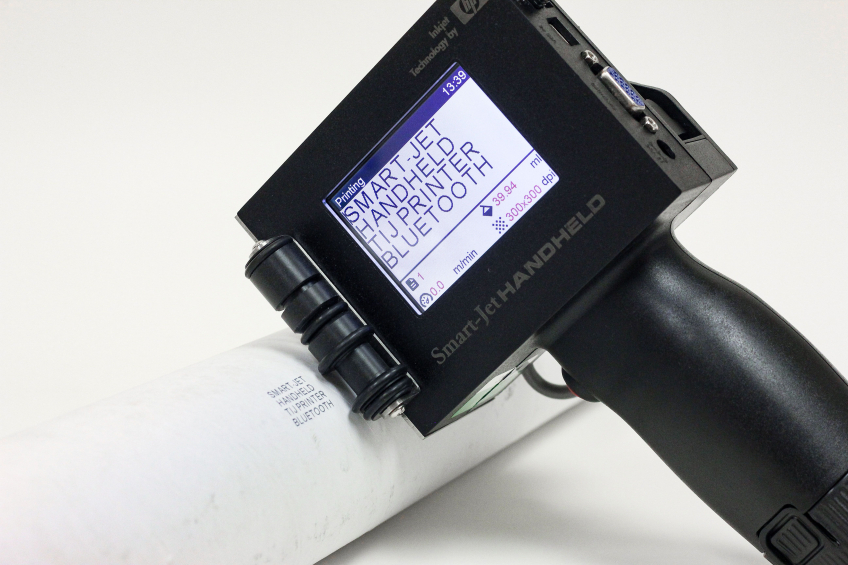
Inkjet marking, also known as Inkjet, is a technology that uses liquid ink or dye to apply patterns, text, barcodes or logos to various surfaces. The marking process is non-contact – small droplets of ink are sprayed onto the material to be marked under high pressure.

Inkjet marking is primarily used in industrial environments where a wide range of materials need to be marked quickly and with high quality.

Types of ink marking

There are two main types of inkjet systems, which differ in their ink droplet technology:

1. Piezoelectric inkjet systems

This technology uses piezoelectric crystals that deform under an electrical voltage to form ink droplets. The advantage is that the ink does not need to be heated, allowing a wider range of inks to be used and increasing the flexibility of the system.

2. Thermal inkjet systems

Here, heat is used to generate ink droplets. These systems are common in office printers but are also used in industry. The advantage is high printing speed and good output quality.

Advantages of ink marking

  • Versatile: Inkjet technology is very flexible and can print on a wide range of materials – from paper and plastic to glass, metal and wood. This makes it the ideal choice for product labelling in a variety of industries.
  • High print quality:Inkjet marking provides excellent print quality with high resolution, which is important for detailed marking such as logos, barcodes or QR codes. This makes it ideal for printing on packaging, labels and other marketing materials.
  • Speed and efficiency: because inkjet printers are able to print without the need for surface contact (for example, without the use of print rollers), the printing process is fast and efficient. This is particularly advantageous in mass production where a large number of items need to be marked in a short time.
  • Lower running costs: inkjet printing systems tend to be relatively cheap to buy, making them an affordable solution for small and medium-sized businesses. They also do not require complex maintenance procedures, which reduces maintenance costs.
  • Flexible applications: Inkjet technology is suitable for a variety of applications, including marking serial numbers, production dates, expiration dates, barcodes and other important information on products that are highly customizable and easy to change.

Disadvantages of ink marking

  • Susceptibility to fading: Ink markings, especially some types of inks, may be susceptible to fading or bleeding when exposed to water, UV light or other aggressive substances. It is therefore important to select the correct ink for the specific conditions of use.
  • Maintenance and cleaning: although inkjet systems do not require complex mechanical maintenance, it is important to clean the nozzles regularly to prevent ink from drying out. Irregular maintenance can lead to print quality failures and the need to replace nozzles.

Are you considering introducing inkjet marking into production?

We can help you select the right technology, optimise costs and integrate the solution into your production process.
Contact us for a free consultation and find out how inkjet marking can benefit your business too.

Gallery

Have we worked together before?
We can help you expand the capabilities of your facility to suit your needs.

More news

Nezávazná poptávka

Odesláním zprávy beru na vědomí zpracování osobních údajů.

Non-binding inquiry

By sending a message, I acknowledge the processing of personal data.