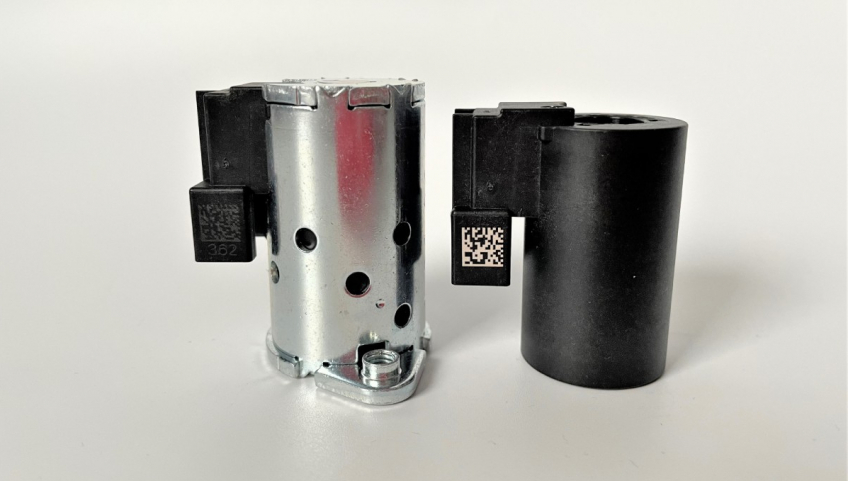
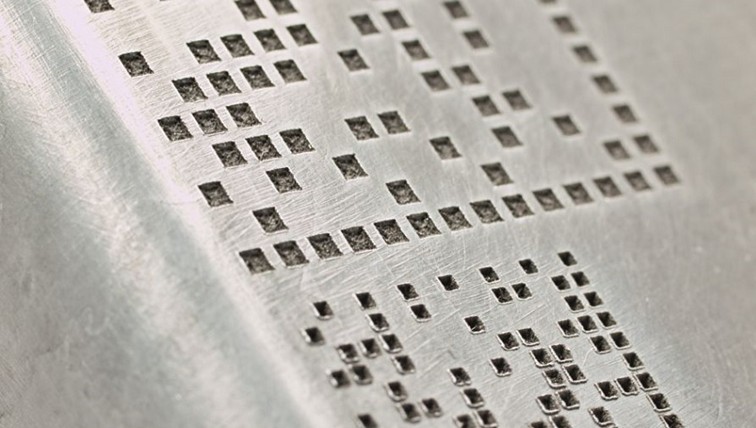
In the context of a new customer enquiry, we found ourselves in a situation of direct comparison of the marking results with an unnamed competitor. The laser application itself concerns the contrast laser marking of adatamatrix code on a plastic component. The resulting difference in contrast achieved led us to write this article and compare the laser technologies in terms of parameters and price.
Insiders know that the high contrast description of plastic components may not be as simple an application as it may first appear. The marking application for which fiber pulsed lasers are used is influenced by many factors.
The first is the composition of the plastic material itself, which influences the way it interacts with the laser, meaning in particular its absorption of laser radiation of a given wavelength. The composition of the material also determines other parameters such as the melting temperature.
From the laser system point of view, the following parameters are crucial:
pulse length and pulse waveform
peak power
pulse energy
beam quality and energy density per area
In case of using too long pulses, negative parasitic phenomena can occur, especially the transfer of large amounts of energy to the surroundings of the affected area, manifested mainly in the form of material melting. The use of too concentrated energy will result in significant degradation of the material damaging the resulting marking contrast. Conversely, energy that is too distributed in space will not be able to build up an adequate material response.
In today’s fiercely competitive environment, there is a high diversity in pricing for pulsed fiber laser assemblies. The differences between these prices reflect the capabilities of these systems. The term ‘system options’ does not imply anything other than a combination of the above mentioned parameters. A comparison of the marking contrasts achieved using lasers from opposite ends of the price spectrum is shown in the photo below.
So far, we have addressed the issue only from the perspective of technology and the possibilities it offers. However, when directly comparing the results shown below, it is also necessary to take into account the factor of the application setup itself. To fully exploit the potential of a given laser system, it is necessary to have the necessary know-how and experience.
Want to know more about identifying parts?
If you would like to learn more about identifying parts in Industry 4.0, watch our expert webinar!
In the webinar, the laser is presented in the context of traceability, where it plays the role of an initial and key element to ensure the identification of products or parts. Laser is used by manufacturers for product marking/engraving because of its many advantages – accuracy, indelibility, marking of uneven surfaces, speed, flexibility, etc.