While VarioSCAN technology is not new to the market, its potential is unfortunately not often exploited. In many cases, this technology, capable of overcoming unevenness and differences in elevation on the product, can be used instead of refocusing the laser by moving it along the vertical axis (or other positioning devices).
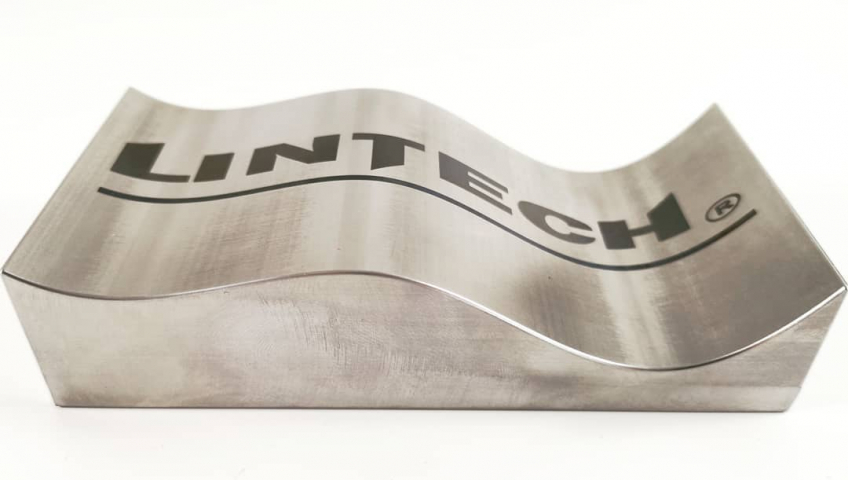
The VarioSCAN technology of our partner company SCANLAB is based on the variable refocus height of the optics on the surface of the material under the lens. This enables it to compensate for curvature, unevenness or different height levels of the material. Thus, if a product is made up of several different height levels, it is possible to create graphics, texts and codes continuously even on such a rugged surface. The laser output does not have to be moved manually or by machine along the vertical axis, it is stationary and the refocusing is taken care of by special optics inserted between the expander and the scanning head aperture.
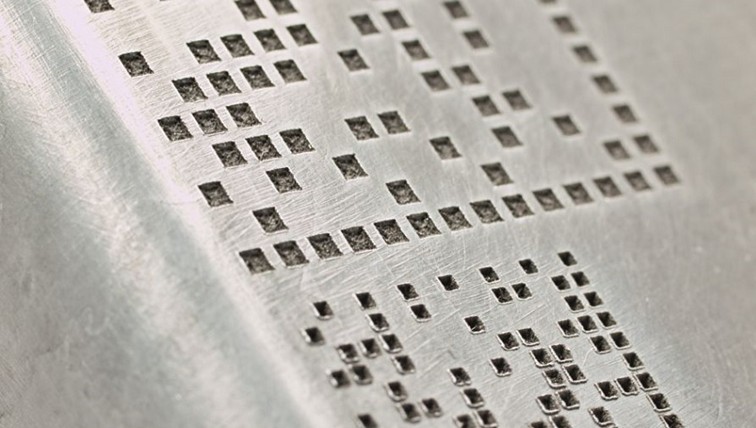
This method can be applied to cylindrical surfaces, inclined planes, hemispheres or specific product curves according to the recorded 3D model. Once the workpiece is accurately established, the same description parameters can then be created on all parts of the workpiece – same depth, same shade using the same energy. Various types of materials (metal, plastic, glass) and surfaces can be described. To be able to use VarioSCAN technology, a control software add-on is required to ensure precise coordination of the optics and laser.
Using different lenses and different types of VarioSCAN technology, it is possible to refocus from ±2mm up to ±400mm – of course, with the right laser type with the right beam quality and spot size. In our case, the combination of the f-theta 160mm lens and the VarioSCAN 20i is the most used so far.